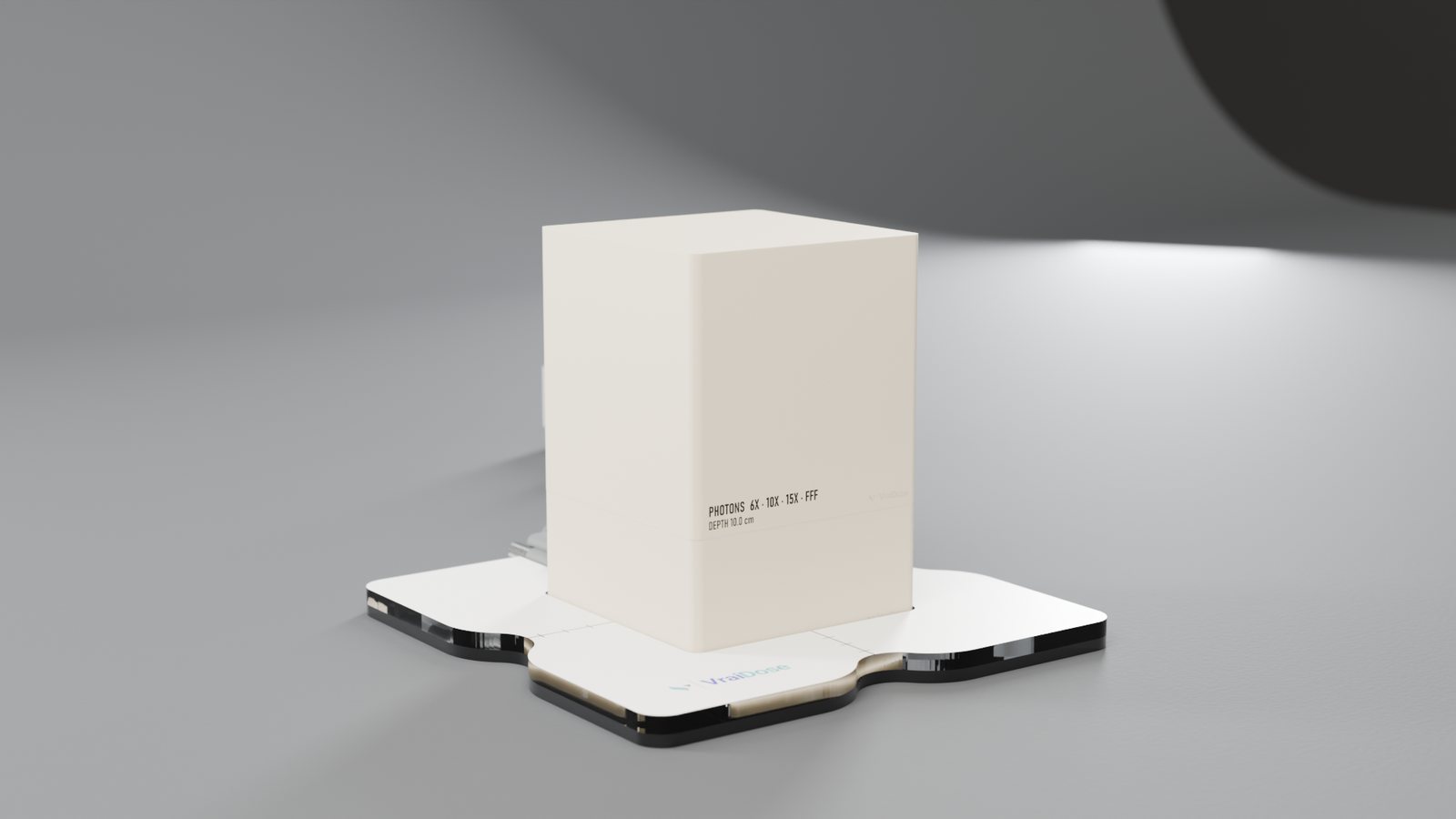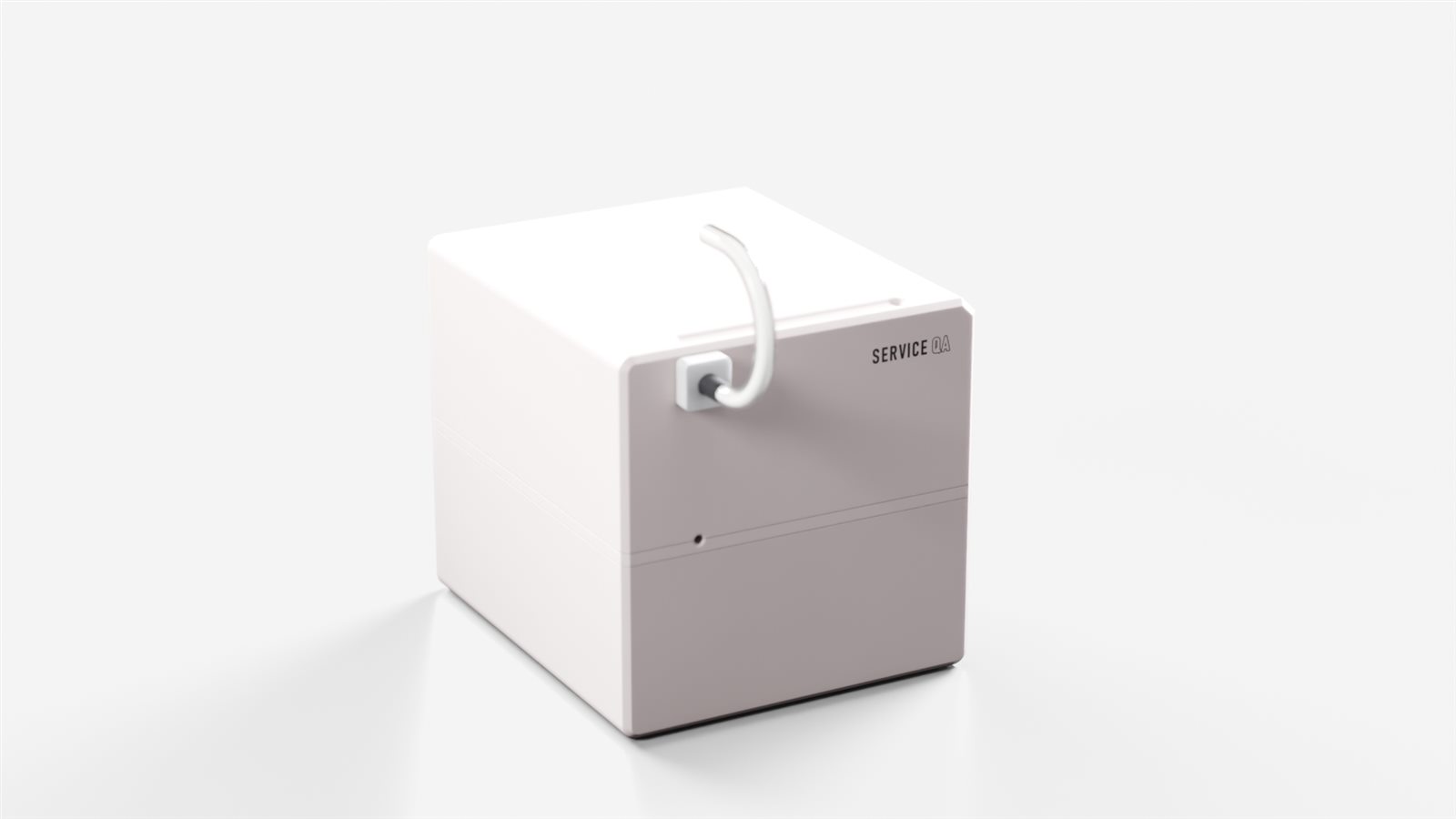
Service QA
Checks the afterloader itself: where the source stops, how long it dwells, how it travels between positions, and whether output holds steady over time.
- ChecksPosition · dwell · transit
- UseDaily · source exchange

VraiDose brings afterloader service checks and applicator-specific QA onto one platform. Choose the insert for the test you're running, deliver from your own afterloader, and keep every result in one record.
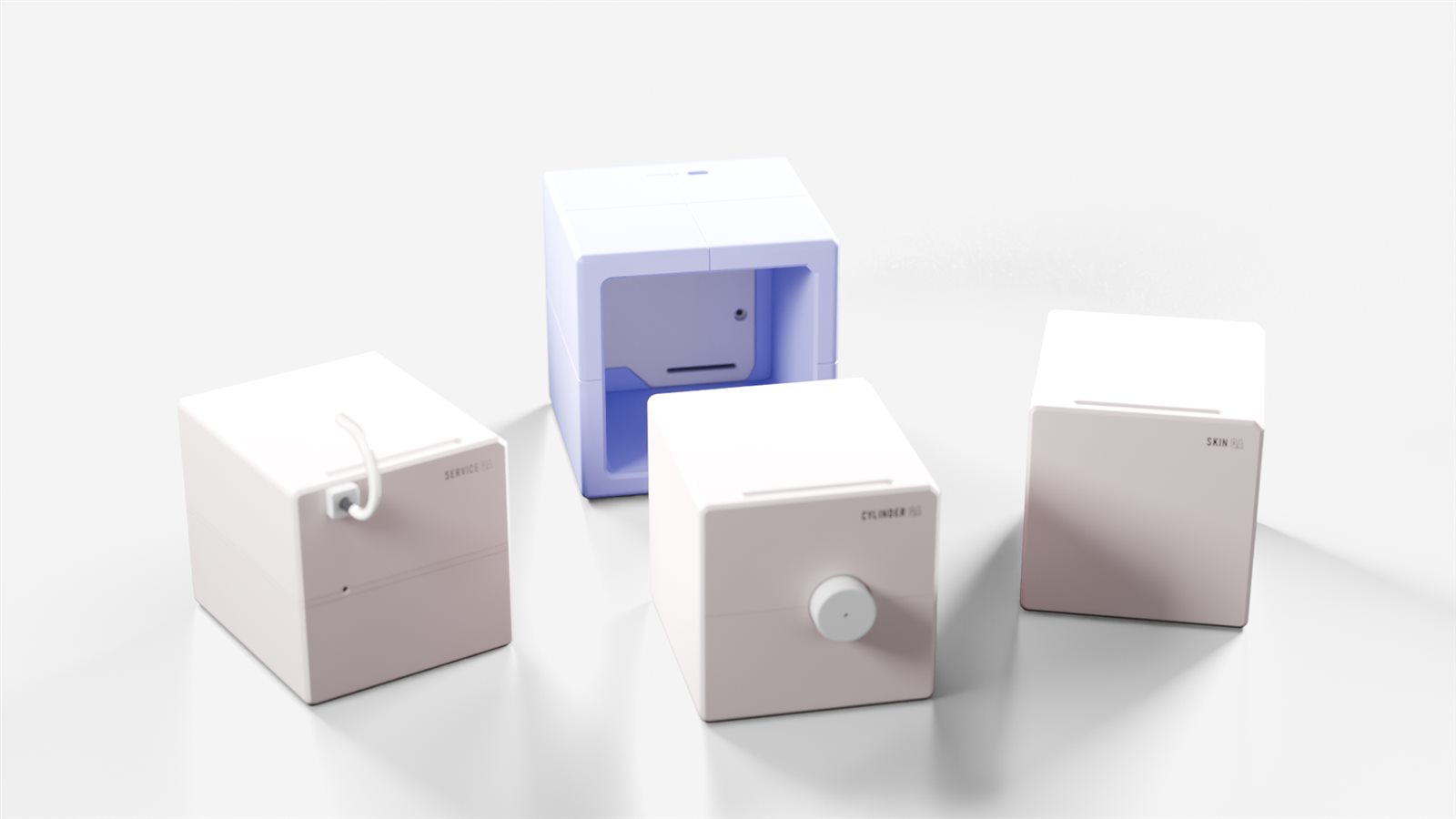
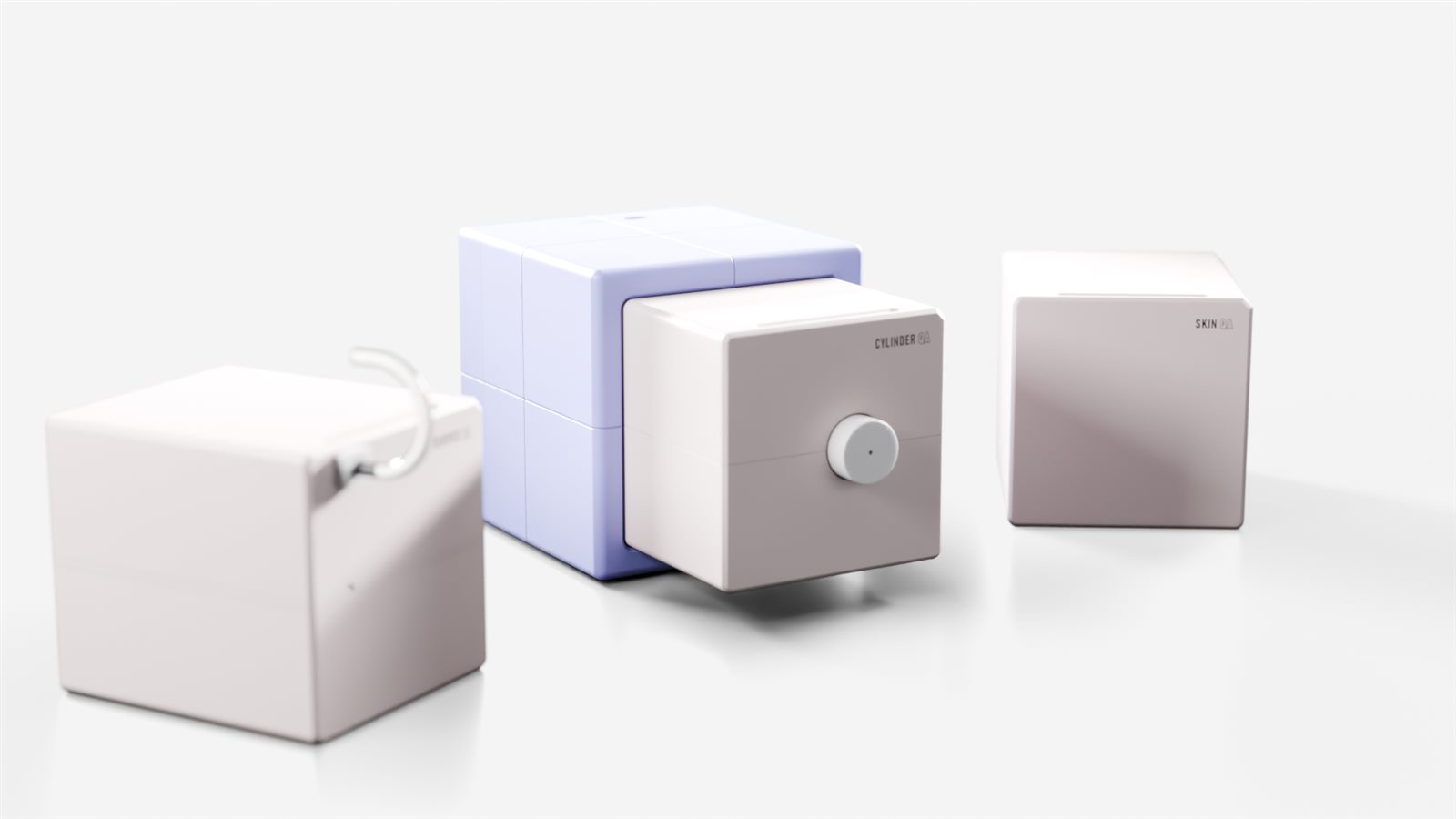
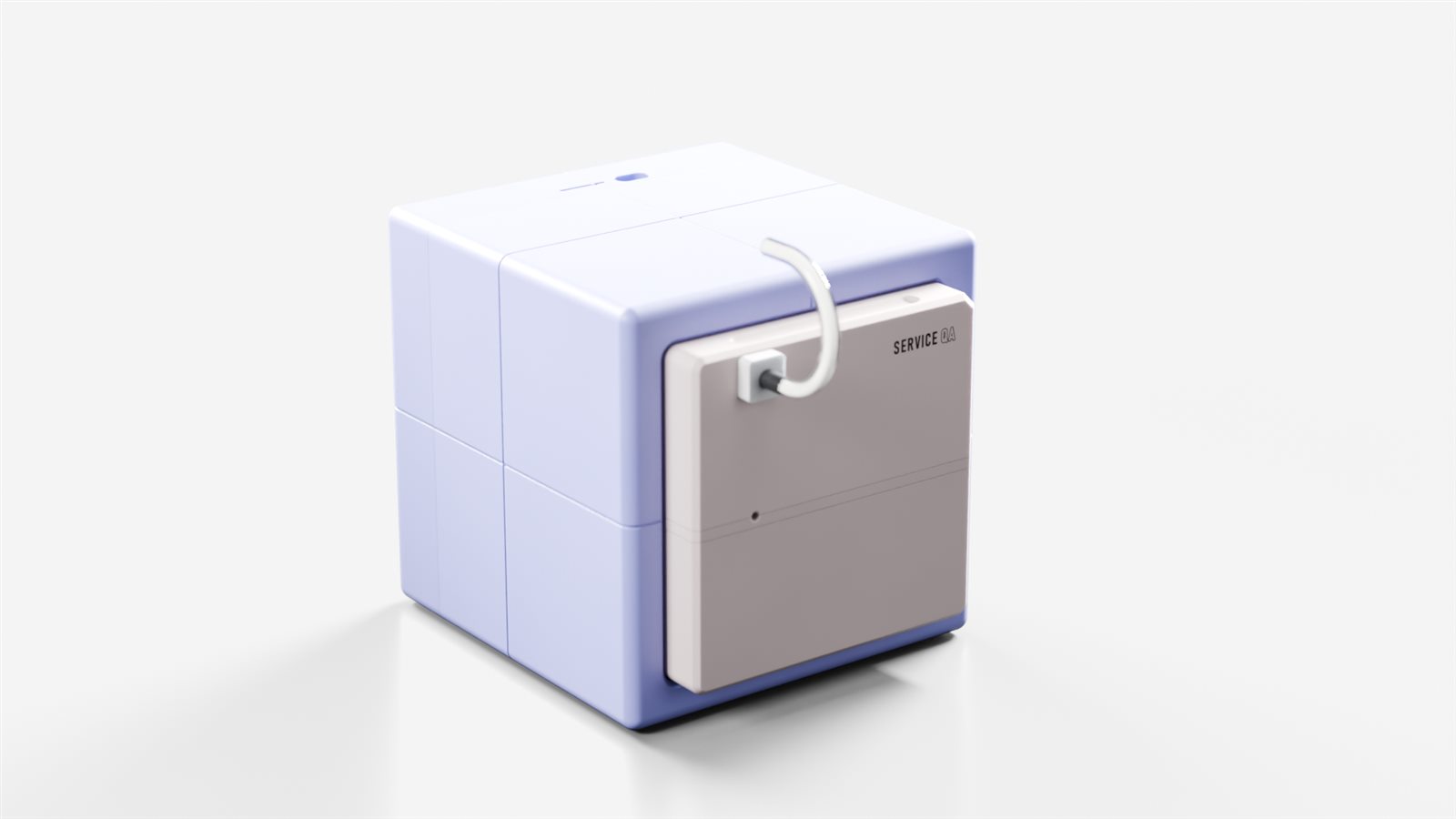
One insert checks the afterloader itself. The others check what a specific clinical applicator delivers. All of them seat in the same body, so setups repeat from one session to the next.
Checks the afterloader itself: where the source stops, how long it dwells, how it travels between positions, and whether output holds steady over time.
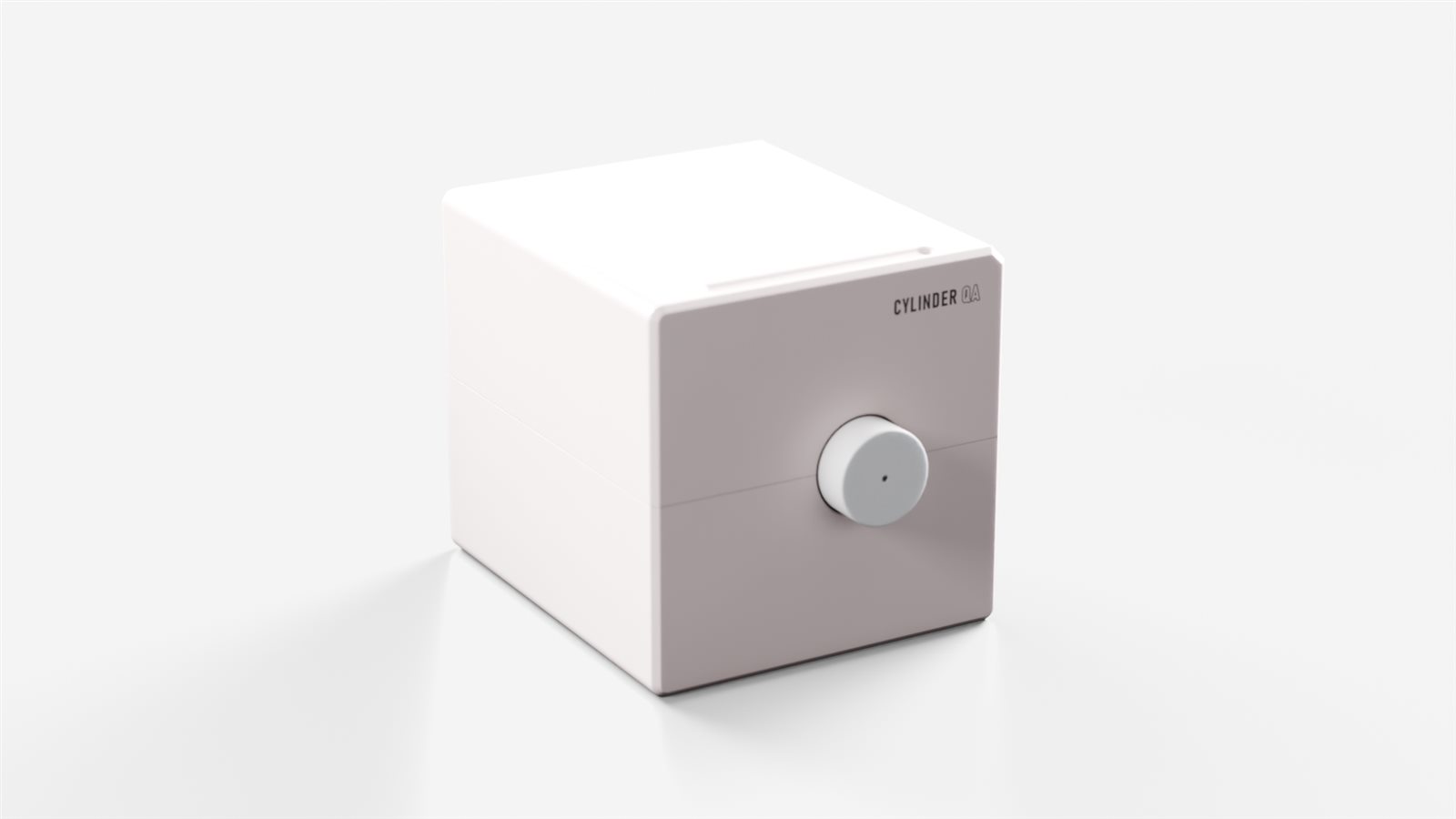
Takes a vaginal cylinder through its front port so you can compare what the applicator delivers with what your treatment plan expects.
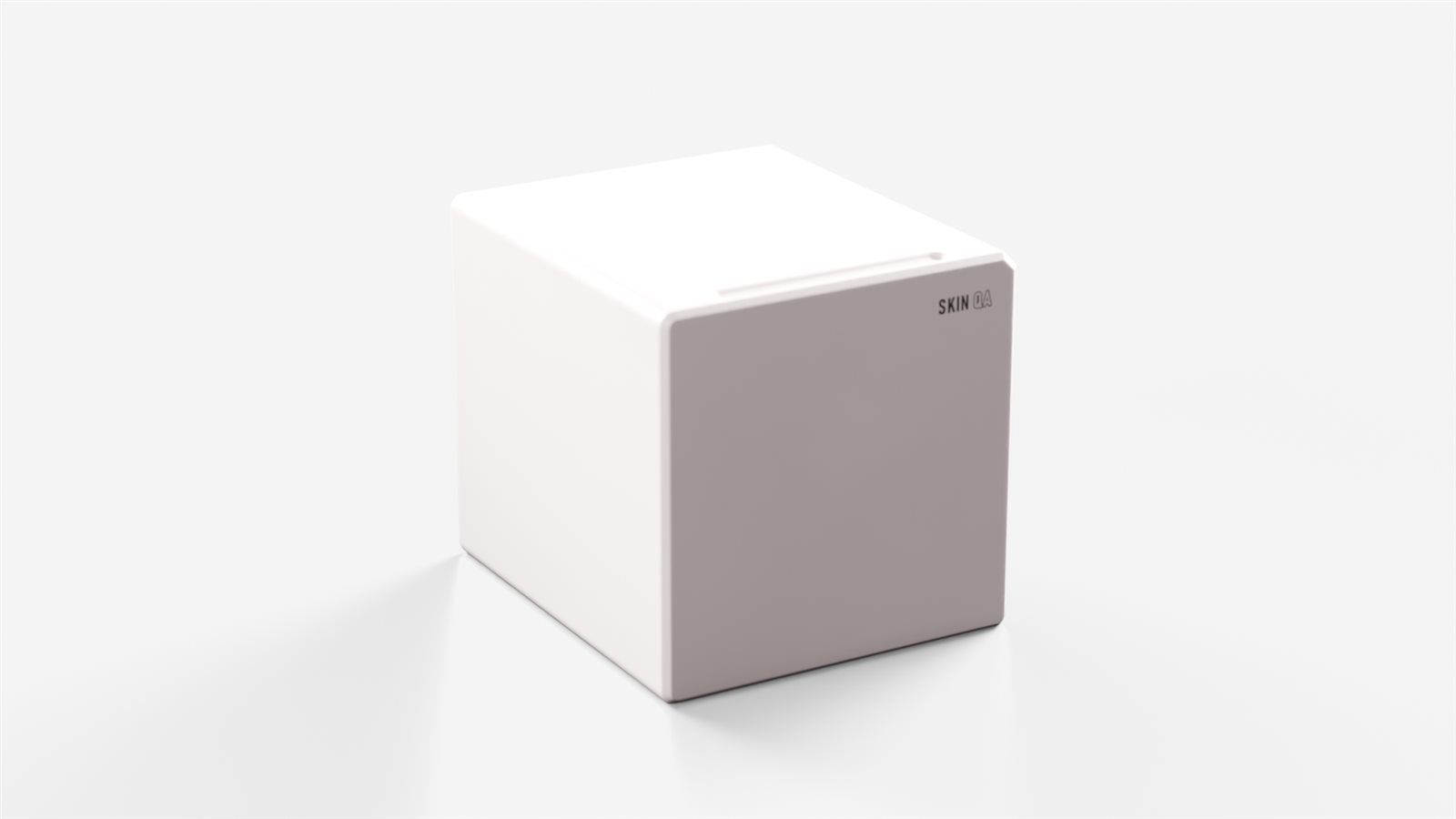
For surface treatments, where small setup differences matter most. Checks the dose pattern at shallow depth under the applicator.
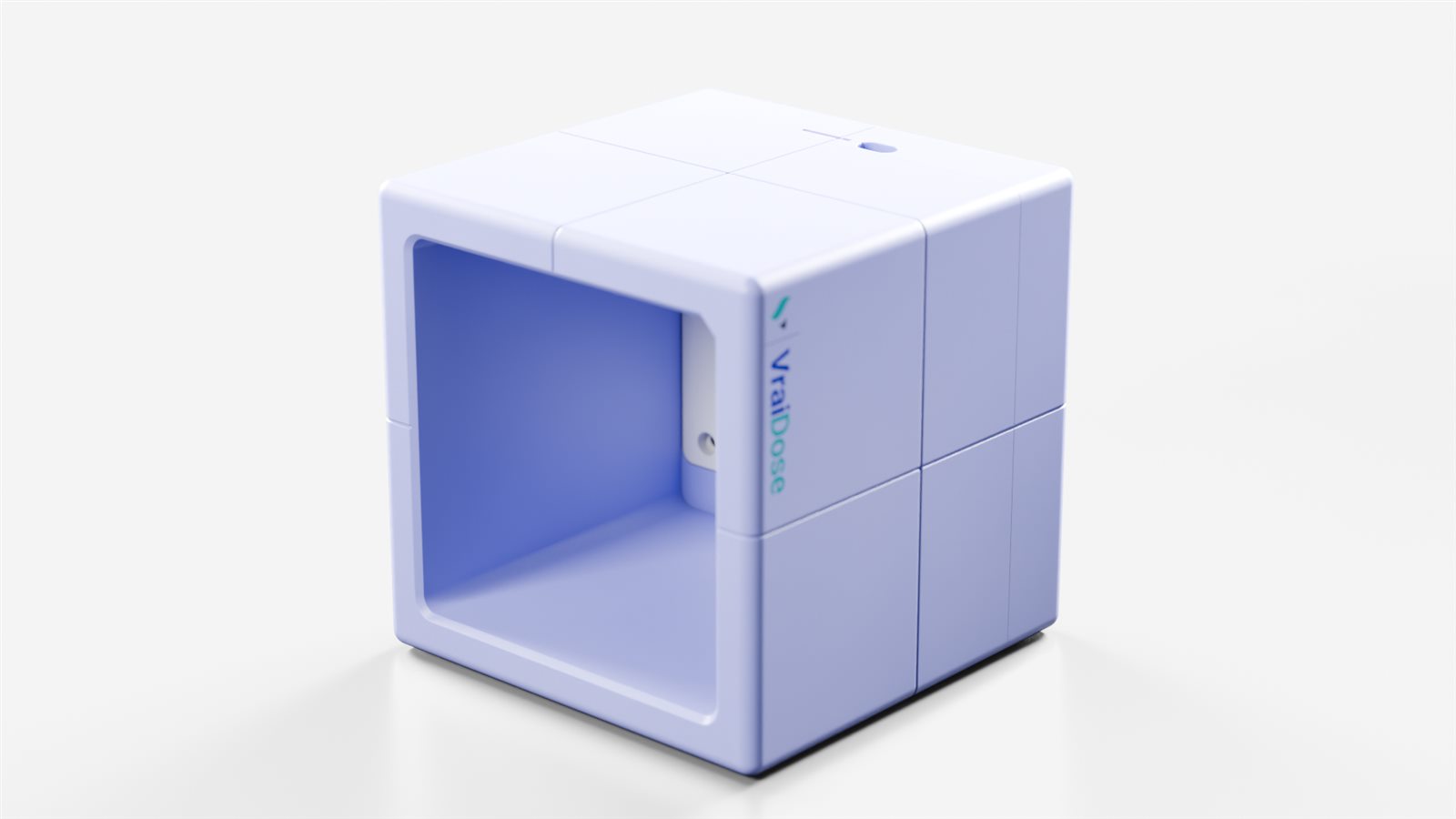
Every insert seats the same way, so today's result can be compared with last month's.
Scan the assembled phantom with the applicator in place and plan on it as you would for a patient.
Each run ends in a pass or fail verdict, with the underlying data kept for later review.
The same four steps whether you're running a morning check, accepting a new source or commissioning an applicator.
Daily QA, source exchange, commissioning or an applicator end-to-end check.
Seat the insert for that test and connect your afterloader channel.
Run the QA sequence or your treatment plan from your own afterloader.
Get a pass or fail verdict against your tolerances, a PDF report and a trend line across sessions.
The VraiDose app turns every run into a clear verdict against your own tolerances, a report you can file, and a trend you can watch from one source exchange to the next.
Every number is judged against tolerances you set and the protocol you name. A number with no nominal reads "not checked", never a silent pass.
A four-page PDF for each run, led by the verdict, with the curves behind each number and the definition of every metric. Save or print in one click.
Every captured run's headline numbers in order, drawn against their tolerance band, so a slow change across source exchanges stands out.
Each run is saved as CSV for your own systems and as a data file the app reopens exactly as it was captured. Tolerances and protocol travel with every report.
A built-in simulator runs the full app with no hardware attached, for training new staff, demos and setting up your protocol in advance.
Values aren't smoothed. Out-of-service channels are marked as estimates. A number that can't be measured reads "—" instead of a reassuring 0.00 %.
| MPPG 13.a | What it asks for | What the app keeps |
|---|---|---|
| §3.6 | Records of spot checks and surveys kept for 3 years. | A PDF report and CSV data for every run, dated and stored on your system. |
| §7.1, Table 4 | Commissioning tests before clinical use; daily QA after any repair service; tolerances given as recommended (required). | Your tolerances and protocol name, saved and printed into every report. |
| Table 5 | A baseline for source positioning within certain applicators, checked as needed. | A baseline run per applicator, with later runs compared against it in Trend. |
The app helps document QA. Meeting MPPG 13.a remains the responsibility of each clinic's physics program.
The guidance asks physicists to check more than conventional tools make easy. VraiDose puts those checks on one platform you set up the same way every time.
Check source position and dwell timing on the same geometry every morning, after every service and at every source exchange.
Evidence A →Cylinder, shielded cylinder and surface inserts re-check what each applicator delivers after a source exchange, with no film to develop.
Evidence B →Deliver from your own afterloader into a phantom imaged with the applicator in place. The result comes from a measurement, not from the planning system's own data.
Evidence C →Target and organ limits are set in Gy. Know that your applicator delivers the dose you planned before it reaches a patient.
Evidence D →Findings from AAPM and AAPM/ESTRO reports and the EMBRACE studies, paraphrased from the section cited beside each one.
Source position should be accurate to 1 mm and must be within 2 mm, verified under a fixed test geometry at every source exchange and in daily QA.
Minimum dwell times on some afterloaders may be as low as 0.1 s, which the guideline says cannot be verified by conventional means. Its suggested stopwatch check only catches gross errors.
Some applicators are highly sensitive to source position, which can shift over time, with repeated use and with source exchanges. Named examples: tandem and ring, complex gynecological, conical skin and some shielded applicators.
Autoradiography was the standard way to confirm source positions inside applicators. As clinics go film-free, this has become harder.
Reference dose data are lacking for each source and applicator combination, so indirect validation of shielded applicator models is not feasible. Applicator models that don't match the real device create highly significant error pathways.
Planning systems have near-universally neglected applicator shielding. As a result, rectal and bladder wall doses are generally not calculated accurately for gynecological implants.
The standard calculation assumes no shielding between sources, water-equivalent tissue, and the same scatter volume as the reference data.
Secondary dose-calculation programs take their input from the planning system and typically cannot find planning errors.
The team must run at least one dry run of the whole process, from imaging to dose delivery, for each treatment technique, and again when a key part of the process changes.
Calls for physical phantoms of known materials, possibly with applicator and shield inserts, with dose measured experimentally to give independent reference data for validating planning systems.
RetroEMBRACE and EMBRACE I showed that clinical outcome is related to dose prescription and technique.
Suboptimal local control is predicted for patients whose high-risk target (CTVHR D90) does not reach 85 Gy.
Keeping rectal D2cm³ to 65 Gy or less holds grade 2+ bleeding to 5.2% or less, and keeping it to 75 Gy or less holds fistulae to 2.7% or less.
Across 1,341 patients at 24 centres, median target D90 was 90 Gy and five-year local control was 92%.
Rivard MJ, et al. Med Phys 2004;31(3):633–674.
Perez-Calatayud J, et al. Med Phys 2012;39(5):2904–2929.
Beaulieu L, et al. Med Phys 2012;39(10):6208–6236.
Richardson SL, et al. J Appl Clin Med Phys 2023;24(3):e13829.
Pötter R, et al. Lancet Oncol 2021;22(4):538–547.
Pötter R, et al. Clin Transl Radiat Oncol 2018;9:48–60.
Findings are paraphrased from the cited sections; EMBRACE I figures are from the published abstract. The reports do not mention VraiDose, and VraiDose is not endorsed by the AAPM, ESTRO, GEC-ESTRO or the EMBRACE study group.
An illustrative Ir-192 dwell sequence through the phantom, rendered from the same model as the product shots.
VraiDose is in development. Tell us which afterloader and applicators you use, and we'll keep you posted as the inserts take shape.